Recycling and Sustainability ??? Carpet Steam Cleaner Services
 Carpet Steam Cleaner operations are increasingly measured not only by cleaning performance but by environmental impact. Our sustainability page outlines measurable goals and practical steps taken across our carpet steaming service, from vehicle emissions to material reuse. We set an ambitious recycling percentage target and pursue partnerships and local solutions to reduce waste at every stage of operations.
Our approach aligns the carpet steamer team's daily work with local policies: many boroughs operate a three-stream waste separation model (paper/card, glass/plastic, and organic), while others complement that with separate textile and bulky-waste collections. By understanding each area???s rules we make sure steam carpet cleaning by our crews dovetails with municipal recycling schemes and transfer station requirements.

Recycling Percentage Target
We have established a clear, time-bound target: to achieve a 85% recycling and reuse rate for all recoverable materials by 2028. This target covers:
- Textile recycling ??? reusable rugs, pads and fabric removed during steam carpet cleaning are sorted and diverted from landfill;
- Foam and underlay recovery ??? padding and underlay are separated for specialist recycling;
- Packaging and consumables ??? cardboard, plastics and chemical containers are recycled or captured for refill schemes.
To hit an 85% diversion rate we combine logistical planning with local infrastructure. We work closely with local transfer stations to ensure materials are delivered to the right processing streams rather than the general waste line. These transfer stations accept segregated textiles, mixed recycling and organics depending on borough arrangements, and they accelerate material recovery at scale.
Our field teams use clear visual guides and color-coded bins on service vans so that when a carpet steamer extracts old carpet or pads, items are pre-sorted at source. This practice is informed by boroughs??? approaches to waste separation ??? where required we adopt four-stream sorting (glass, paper, plastic, textiles) to match municipal routes and avoid contamination.
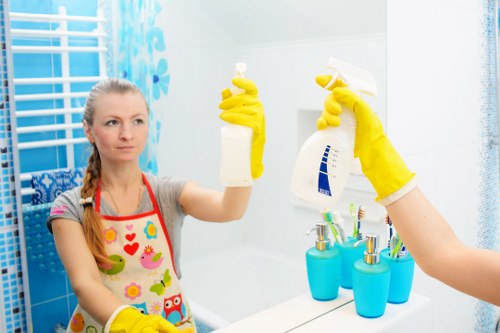
![A close-up view of a modern bathroom or kitchen vanity area featuring a white sink with a smooth, glossy surface, accompanied by a silver faucet and two blue glass soap dispensers. In the background, part of a person wearing green rubber gloves is seen wiping a mirror with a white cloth, highlighting cleaning activity. The countertop appears clean and uncluttered, with a small green potted plant adding a touch of natural decor. The scene emphasizes a professional cleaning process, with natural lighting reflecting off the polished surfaces, and subtly suggests local cleaning services in the [TOWN] or [POSTCODE] area. The image illustrates the meticulous cleaning of bathroom or kitchen surfaces typical of services provided by Carpet Steam Cleaner, situated within the broader context of environmental and recycling sustainability practices.](/pub/_photos/cleaning/f1434590392.jpg)
Local Transfer Stations and Processing
We maintain scheduled drop-offs at designated transfer stations and material recovery facilities. By mapping which borough accepts which streams, our routing minimizes double-handling and reduces transport emissions. Transfers are monitored with documentation, and we track tonnages to make progress visible against our recycling goals.
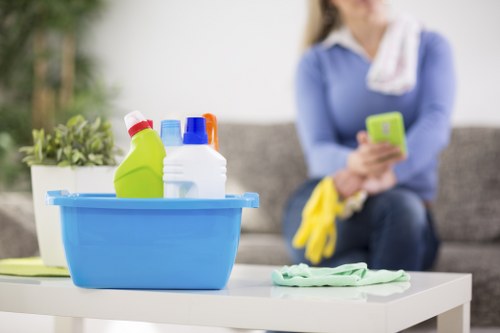
![The image shows a person wearing a light green shirt with decorative shoulder details and bright orange rubber cleaning gloves, holding a white spray bottle with a yellow nozzle in one hand and a yellow cleaning cloth in the other. The individual appears to be preparing cleaning supplies, likely for use in a domestic or commercial setting. The background is blurred but suggests a well-lit environment, possibly a kitchen or living room in a home or office in the UK, such as in or near [POSTCODE] or [TOWN]. The focus on cleaning supplies emphasizes the professional approach to hygiene and maintenance, aligned with services offered by Carpet Steam Cleaner, particularly in the context of their recycling and sustainability initiatives mentioned on their website. The surface in focus is likely a countertop or surface area that benefits from thorough cleaning, contributing to a hygienic space. The image visually conveys readiness and attention to detail in cleaning tasks, underlining the importance of quality equipment and practices in maintaining clean environments in London or surrounding areas.](/pub/_photos/cleaning/f1436626864.jpg)
Charity Partnerships and Social Reuse
Strong partnerships with local charities are central to our reuse strategy. Cleanable rugs, serviceable carpet sections and reusable underlay are offered to community centers, refurbishment charities and social enterprises. We also donate cleaned floor coverings to refurb projects and shelters when items meet safety and hygiene standards. These partnerships deliver social value while supporting our circular-economy ambitions.
Our agreements with non-profit partners follow clear safety checks: textiles that cannot be reused are sent to accredited textile recyclers who either process fibres into insulation or convert materials into secondary products. This layered approach increases the reuse-to-recycle ratio, reducing the environmental footprint of steam carpet cleaning operations.
Low-Carbon Vans, Route Optimisation and Other Measures
We field a fleet of low-carbon vans ??? a mix of electric and plug-in hybrid vehicles ??? to carry our carpet steam cleaning teams and equipment. Vehicles are chosen for payload efficiency and fitted with telematics for route optimisation. The combined effect is lower tailpipe emissions and fewer miles driven per service call.
Additional sustainability measures include:
- Using concentrated, biodegradable cleaning solutions to reduce packaging waste and water use;
- On-site water recovery systems where local regulations permit, reducing wastewater entering drains;
- Regular maintenance of steam carpet cleaner units to maximise energy efficiency and minimize consumable waste;
- Staff training on waste segregation aligned to borough collection standards, ensuring consistent separation at source.
Progress is reported annually and we commit to continuous improvement. By targeting an 85% recycling level, leveraging local transfer stations, building charity partnerships and investing in low-carbon vans, our carpet steam cleaner services contribute to a measurable and transparent reduction in environmental impact. We strive to be part of a circular approach that benefits communities, reduces landfill and supports local recycling economies.